Beijing
City Overview
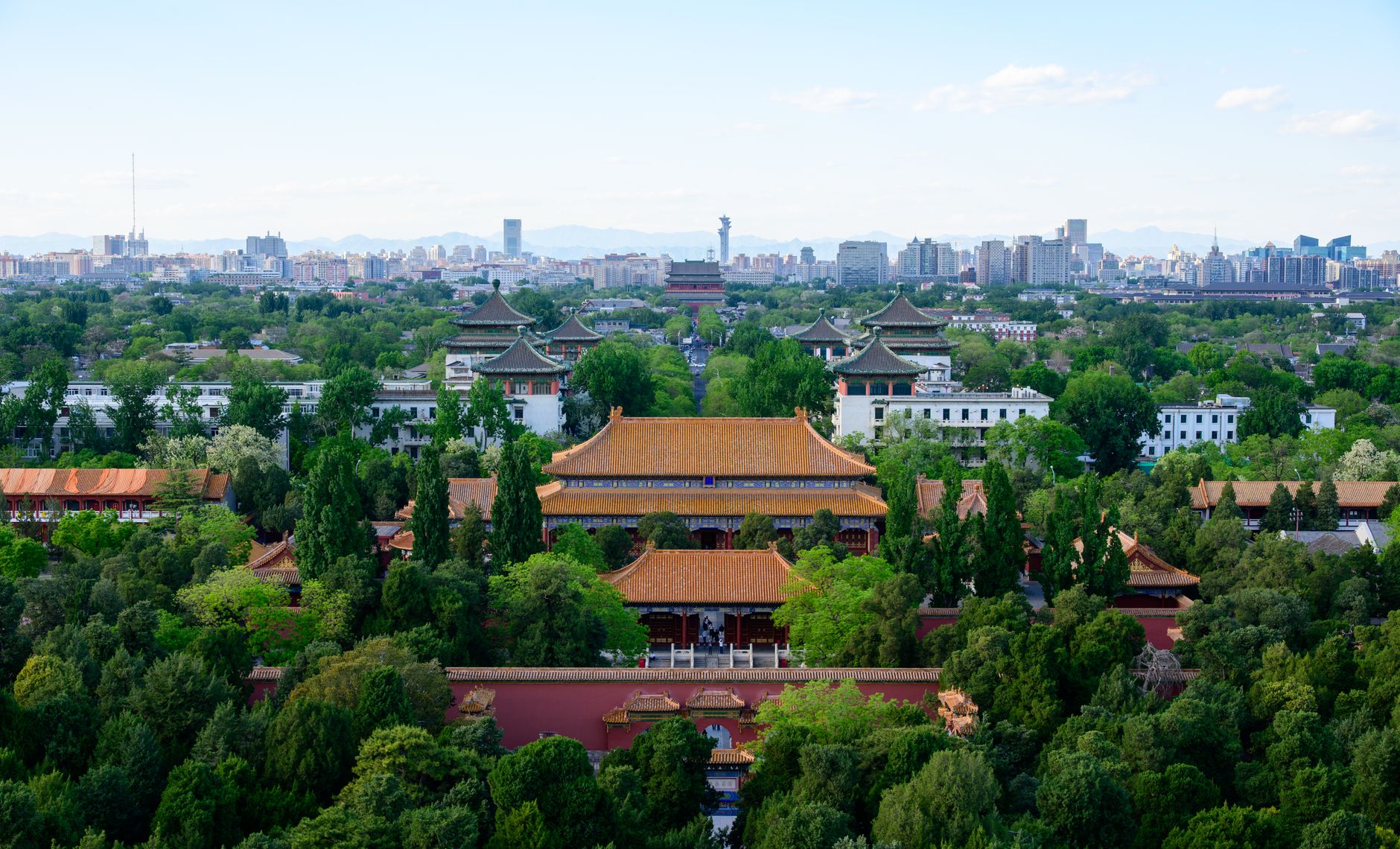
Beijing, the capital of the People's Republic of China, is a city where more than 3,000 years of history coexist with the energy of a modern global metropolis. Situated on the northwestern edge of the North China Plain, the city stretches between 39°26′–41°03′ N latitude and 115°25′–117°30′ E longitude, covering a total area of 16,410 square kilometers.
The city's terrain slopes from northwest to southeast. Mountains surround Beijing on its western, northern, and northeastern sides, where the Taihang and Yanshan mountain ranges converge to form a natural defensive barrier. Dongling Mountain, Beijing's highest peak, rises to 2,303 meters (7,556 feet) above sea level. To the southeast, the landscape gradually opens into broad alluvial plains that gently descend toward the Bohai Sea.
Flowing from neighboring Shanxi Province, the Yongding River winds through mountain gorges before entering Beijing from the northwest. After traveling more than 170 kilometers (106 miles) across the municipality, it joins the Hai River system and has long been regarded as Beijing's "Mother River." To address the region's naturally dry climate, Beijing has constructed major reservoirs—including the Miyun Reservoir and Guanting Reservoir—along the Chaobai and Yongding river systems. These projects not only secure the city's water supply but have also significantly reshaped the region's hydrology.
As one of China's four municipalities directly administered by the central government, Beijing serves as the nation's political center and the seat of its highest state institutions. Administratively, the municipality consists of 16 districts. By the end of 2023, Beijing's permanent resident population had reached 21.86 million, making it one of the world's largest and most densely populated megacities.
People from across China and around the world have made Beijing their home, creating a diverse and inclusive urban culture. Long-established Beijing families coexist with generations of newcomers, giving the city a distinctive character that is simultaneously rooted in tradition and constantly evolving.
Over the centuries, Beijing has been known by many names, each reflecting a different chapter of its remarkable history. Yanjing dates back to the ancient State of Yan during the Western Zhou Dynasty and remains one of the city's oldest names. Ji City (Jicheng), another early name, refers to the ancient capital of the State of Yan. For nearly a thousand years, Jingshi ("Imperial Capital") and Jingcheng ("Capital City") served as common names while Beijing functioned as the seat of successive imperial dynasties.
During the Republic of China era, the city was officially renamed Beiping ("Northern Peace") from 1928 to 1949. In recent years, the nickname Imperial Capital has gained popularity online as a playful yet respectful acknowledgment of Beijing's imperial heritage centered on the Forbidden City. Perhaps the most affectionate nickname, however, is "Forty-Nine City" (Sijiu Cheng). The name refers to the Ming and Qing dynasty city layout—four gates for the Imperial City and nine gates for the Inner City—and evokes the walled city that generations of Beijingers still regard as the spiritual heart of their hometown. Together, these names are more than historical labels; they are living reminders of the many layers that have shaped Beijing over three millennia.
Historical Background

Human settlement in the Beijing region dates back roughly 700,000 years to the era of Peking Man. The history of Beijing as a city, however, is generally traced to the Western Zhou Dynasty.
Around 1045 BCE, after King Wu of Zhou defeated the Shang Dynasty, the area was granted to feudal states, including the State of Yan and the State of Ji. Yan later absorbed Ji and established its capital at Ji City (Jicheng), marking the beginning of Beijing's urban history more than 3,000 years ago. The ancient site is believed to lie near today's Guang'anmen in southwestern Beijing. One of the most significant archaeological discoveries from this era is the Liulihe Western Zhou Yan Capital Site, where inscribed bronze vessels such as the Ke He and Ke Lei have confirmed the historical origins of the State of Yan.
From the Qin and Han dynasties through the Sui and Tang periods, Ji City evolved into a vital military stronghold and commercial hub connecting China's central plains with the northeast. Under the Qin Dynasty, it became Ji County, the administrative seat of Guangyang Commandery. During the Sui and Tang dynasties, it was renamed Youzhou and served as a frontier city defending against northern nomadic peoples. The Tang poet Chen Zi'ang expressed his desolate sentiments here in his famous poem "Climbing Youzhou Terrace" (《登幽州台歌》).
This period also witnessed the flourishing of Buddhism. Yunju Temple in Fangshan, originally founded during the Sui Dynasty, became renowned for its vast collection of stone Buddhist scriptures carved over successive centuries, earning the nickname "the Stone Great Wall of Chinese Buddhism." Although strategically important, Beijing at this stage remained a regional frontier center rather than the political heart of the empire.
A decisive turning point came in 938 CE, when the Khitan-led Liao Dynasty elevated Youzhou to one of its secondary capitals, naming it Nanjing ("Southern Capital"), also known as Yanjing. This marked the beginning of Beijing's transformation into a capital city.
In 1153, the Jurchen-led Jin Dynasty officially moved its capital from Shangjing to Yanjing, renaming it Zhongdu ("Central Capital"). This event marked the beginning of Beijing's more than 800-year history as China's capital. Built on the model of the Northern Song capital at Kaifeng, Jin Zhongdu featured magnificent palaces and an ambitious urban layout, with its center located near today's Fenghuangzui in Fengtai District. Remnants such as the Jin Zhongdu Water Gate still bear witness to the city's former prosperity and symbolize Beijing's transition from a frontier fortress into northern China's political center.
The 13th century brought another transformation as the Mongol Empire rose to power. In 1267, Kublai Khan, founder of the Yuan Dynasty, began constructing an entirely new capital—Dadu (Khanbaliq)—northeast of Jin Zhongdu, centered on the former Jin dynasty detached palace. Scholars and engineers including Liu Bingzhong and Guo Shoujing designed the city according to the planning principles described in the ancient Chinese classic Kaogong Ji, creating an orderly capital with the imperial palace at its center, ceremonial spaces to the front, markets to the rear, ancestral temples to the left, and altars to the right. The city's grid layout and monumental central axis, which continue to define Beijing today, originated during this period.
To improve transportation and grain delivery, Guo Shoujing constructed the Tonghui River, channeling water from Baifu Spring in Changping into the city. The Shichahai area flourished as the effective northern terminus of the Grand Canal, where merchant vessels gathered in great numbers. For the first time in history, Beijing became the political and cultural heart of a unified Chinese empire.
The Ming Dynasty ultimately gave Beijing the urban form recognizable today. In 1368, Ming general Xu Da captured Dadu and renamed the city Beiping. After seizing the throne through the Jingnan Campaign, the Yongle Emperor Zhu Di elevated Beiping to Beijing in 1403, establishing the city's modern name. In 1421, he officially transferred the imperial capital from Nanjing to Beijing.
Over the next fifteen years, enormous resources from across the empire were devoted to constructing the magnificent imperial palace now known as the Forbidden City. To strengthen the city's defenses, the Ming government later expanded the outer city, creating the distinctive layout of inner and outer walled cities.
The Forbidden City, together with the Imperial Ancestral Temple (today's Working People's Cultural Palace), the Altar of Land and Grain (today's Zhongshan Park), the Temple of Heaven, and the Altar of Agriculture, formed a monumental 7.8-kilometer (4.8-mile) Central Axis that became the symbolic backbone of imperial Beijing. More than simply an urban planning achievement, the axis embodied the Confucian ideals of imperial authority and cosmic order. In 2024, the Beijing Central Axis was inscribed on the UNESCO World Heritage List, recognizing it as one of the world's outstanding examples of historic urban planning and as the crowning achievement of Beijing's imperial legacy.
Culture
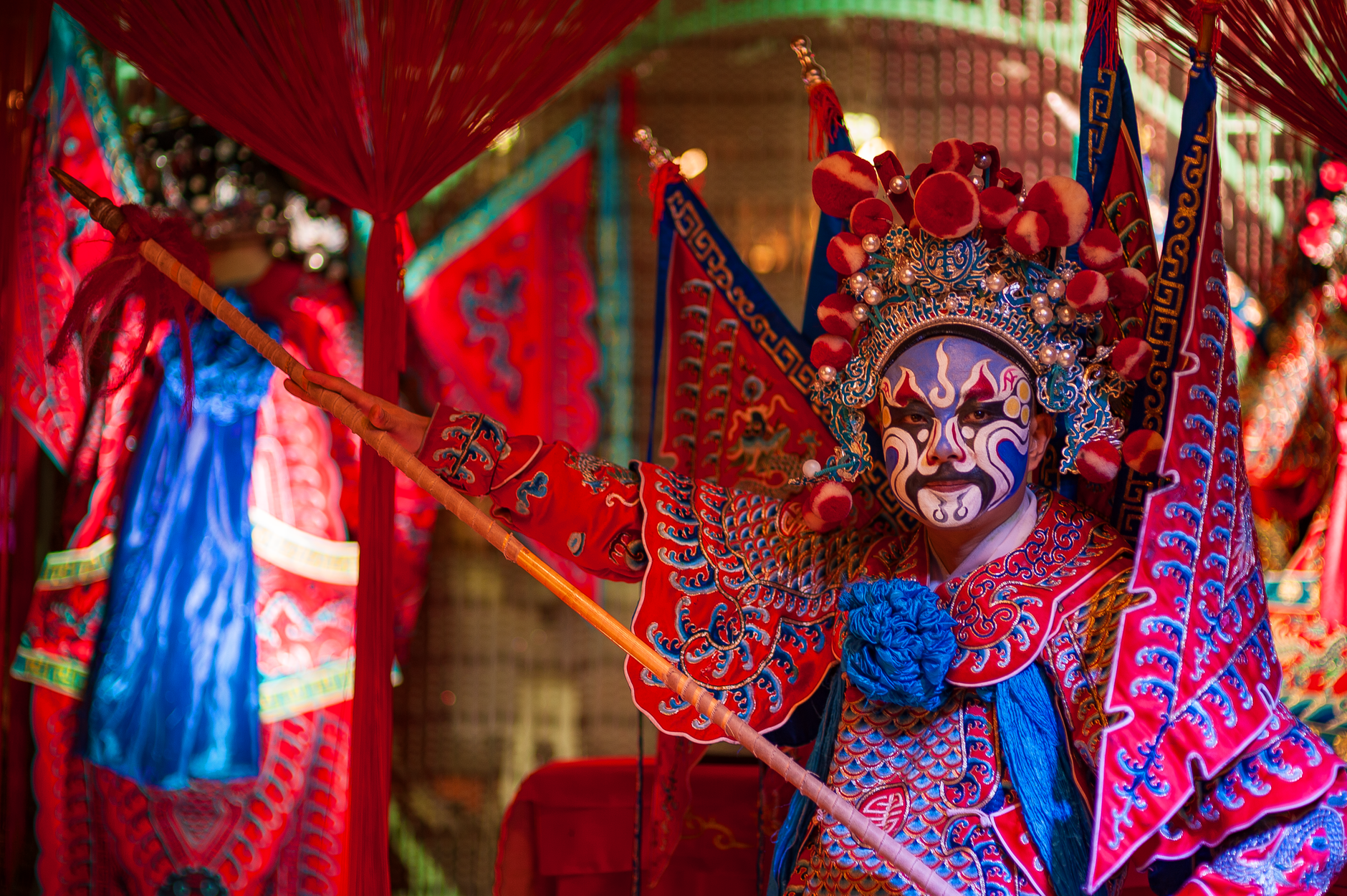
Beijing's culture is the product of centuries of interaction between imperial court traditions and everyday street life, as well as between the customs of the northern Han Chinese and those of China's many ethnic groups. This unique blend has shaped a city where refinement and authenticity exist side by side.
Language is one of the clearest reflections of this cultural diversity. Standard Mandarin, whose pronunciation is based on the Beijing dialect, serves as China's official language and is known for its clear, precise, and elegant pronunciation. By contrast, everyday Beijing dialect is lively, humorous, and deeply rooted in local life. It is instantly recognizable for its frequent use of the "-er" suffix (erhua) and its tendency to soften or merge syllables. For example, "bu zhi dao" (don't know) becomes "bur dao," and "Da Zhalan" (a famous old street) is pronounced "Dashilanr." Local expressions such as juqi (loyal and generous), aotao (feeling frustrated or upset), and sayazi (to run off quickly) capture the wit, warmth, and down-to-earth character of old Beijing.
Traditional customs remain an important part of local life, with ceremonies and seasonal celebrations marking every stage of the year. During the Chinese New Year, temple fairs become the city's largest folk celebrations. Famous fairs at Changdian, Ditan (Temple of Earth), and Longtan Lake combine food, entertainment, and traditional performances. Visitors can sample beloved snacks such as Lüdagun (Rolling Donkey Rice Rolls) and Aiwowo (Sticky Rice Cakes), watch traditional performances including Zhongfan banner acrobatics and Chinese yo-yo (diabolo) demonstrations, and browse handcrafted souvenirs such as the colorful Tu'erye (Rabbit God) figurines and traditional pinwheels.
Traditional etiquette also plays an important role in weddings, funerals, and other life events, reflecting centuries of cultural exchange between Han and Manchu customs. Religiously, Beijing has long embraced a harmonious blend of Confucianism, Buddhism, Taoism, and local folk beliefs. The old saying "Five Sacred Peaks and Eight Great Temples" reflects the city's once-abundant religious landmarks. Among them, the annual Miaofeng Mountain Temple Fair, held every fourth lunar month, remains northern China's largest folk religious gathering, where pilgrims ascend the mountain accompanied by dozens of traditional performance troupes, creating a living showcase of northern Chinese folk culture.
Beijing also represents the pinnacle of China's classical performing arts. Peking Opera, widely regarded as China's national opera, emerged after the Four Great Anhui Opera Troupes arrived in Beijing in 1790 during the reign of the Qianlong Emperor. It evolved by blending elements of Anhui Opera, Han Opera, Kunqu Opera, and Qinqiang, with Xipi and Erhuang becoming its two principal vocal styles. Performers portraying the four classic role categories—Sheng (male), Dan (female), Jing (painted-face), and Chou (comic)—bring entire worlds to life through the highly stylized arts of singing, recitation, acting, and martial movement, often on an almost empty stage.
The legendary Four Great Dan Masters—Mei Lanfang, Cheng Yanqiu, Shang Xiaoyun, and Xun Huisheng—elevated Peking Opera to extraordinary artistic and aesthetic heights.
Another art form closely associated with Beijing is xiangsheng (cross-talk). From humble street performances to professional theater productions, this uniquely Chinese style of comedic dialogue combines storytelling, imitation, wordplay, and satire. Masters such as Hou Baolin and Liu Baorui helped establish xiangsheng as one of China's most beloved performing arts.
Traditional craftsmanship is equally celebrated. The Eight Great Crafts of Yanjing include cloisonné enamelware, jade carving, ivory carving, carved lacquer, gilt lacquer inlay, filigree inlay, imperial carpets, and Beijing embroidery. Once produced exclusively for the imperial court, these luxury crafts represent the highest level of Chinese decorative arts. Many—including cloisonné and filigree inlay—are now recognized as National Intangible Cultural Heritage.
Today, Beijing is home to more than 140 National Intangible Cultural Heritage traditions, ranging from the ancient Zhihua Temple Buddhist Music to the Changdian Temple Fair. Together, they form a living cultural legacy that continues to shape the city's identity.
Architecture & Cityscape
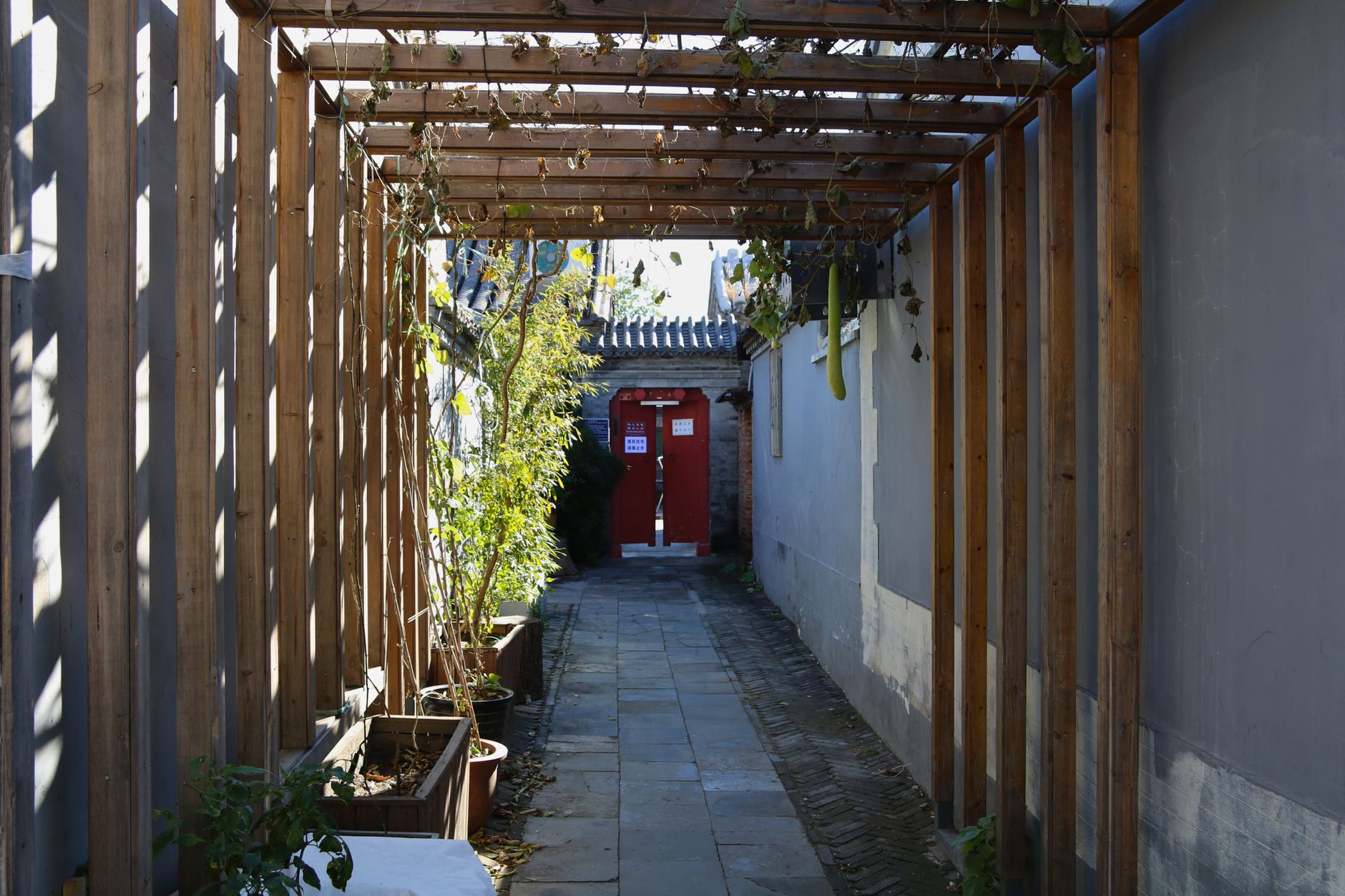
Beijing's architecture tells the story of the city in brick, timber, and concrete. Its urban landscape is shaped by two distinct yet complementary traditions: the magnificent imperial architectural complex that symbolizes state power, and the intimate network of hutongs and siheyuan courtyard homes that reflect everyday life. Together, they create one of the world's most distinctive urban identities.
The greatest achievements of traditional Chinese architecture can be found in Beijing's UNESCO World Heritage sites, including the Forbidden City, the Temple of Heaven, the Summer Palace, and the Ming Tombs. Built according to strict ceremonial principles, these monumental complexes embody the grandeur of imperial China.
At the heart of the Forbidden City stands the Hall of Supreme Harmony, the largest and highest-ranking surviving wooden structure in China. Resting on a three-tiered white marble terrace and crowned with a magnificent double-eaved roof, it served as the ceremonial center of imperial authority. Equally iconic is the Hall of Prayer for Good Harvests at the Temple of Heaven. Rising from a circular marble platform beneath its three-tiered blue-tiled roof topped with a gilded finial, the building is celebrated for its perfect proportions and its symbolic representation of the ancient Chinese belief that heaven is round and earth is square.
Color itself carries symbolic meaning throughout Beijing's imperial architecture. Yellow glazed roof tiles were reserved exclusively for the emperor, crimson walls and gates represented imperial prestige and authority, while elaborate blue-and-green painted decorations were commonly used in princely residences and temples. Grand aristocratic mansions, such as Prince Gong's Mansion and Prince Chun's Mansion, extend this architectural tradition on a slightly smaller but often even more refined scale.
In striking contrast to these monumental palaces are the narrow hutongs and traditional siheyuan courtyard residences that define Beijing's historic neighborhoods. A well-known local saying goes, "There are 3,600 named hutongs, and even more unnamed ones." Most hutongs run along north-south or east-west axes, creating the orderly grid that has characterized the old city for centuries.
A traditional siheyuan centers on a private courtyard enclosed by buildings on all four sides. Constructed with gray bricks and tiled roofs, these residences are understated yet elegant. Architectural elements such as entrance gates, spirit screens, ornamental inner gateways, and covered walkways create a series of increasingly private spaces that foster tranquility and a close connection with nature. The old Beijing saying, "A grapevine trellis, a fish tank, a pomegranate tree, a gentleman, a plump dog, and a cheerful child," evokes the leisurely rhythm of courtyard life that once defined the city.
Today, neighborhoods such as Shichahai, Nanluoguxiang, and Shijia Hutong still preserve much of this historic atmosphere. Although many traditional courtyards now house cafés, boutique shops, galleries, and creative studios, wandering these narrow alleyways remains one of the most authentic ways to experience Beijing's living history.
Modern Beijing presents an architectural landscape that is both diverse and thought-provoking. In the 1950s, the city constructed the celebrated "Ten Great Buildings"—including the Great Hall of the People and the National Museum of China—to commemorate the tenth anniversary of the founding of the People's Republic of China. These projects combined Western neoclassical influences with traditional Chinese design elements.
From the 1990s onward, rapid urbanization transformed Beijing into a showcase for world-renowned architects. The National Centre for the Performing Arts, designed by Paul Andreu, is a futuristic titanium-and-glass dome that appears to float on an artificial lake, creating a dramatic contrast with the crimson walls of the Forbidden City. The National Stadium, designed by Herzog & de Meuron, is instantly recognizable for its iconic "Bird's Nest" structure, while the CCTV Headquarters, designed by Rem Koolhaas, has become one of the world's most recognizable skyscrapers thanks to its bold looping form. Together, these landmarks have redefined Beijing's skyline while sparking ongoing discussions about balancing historic preservation with contemporary architecture.
Among Beijing's most distinctive urban districts, the 798 Art District stands out as a remarkable example of industrial renewal. Former Bauhaus-style factories originally built with East German assistance have been transformed into galleries, design studios, cafés, and contemporary art spaces. Qianmen Street has been carefully restored to recapture the atmosphere of Beijing's bustling commercial district during the late Qing Dynasty and the Republican era. Meanwhile, **San
Food & Cuisine
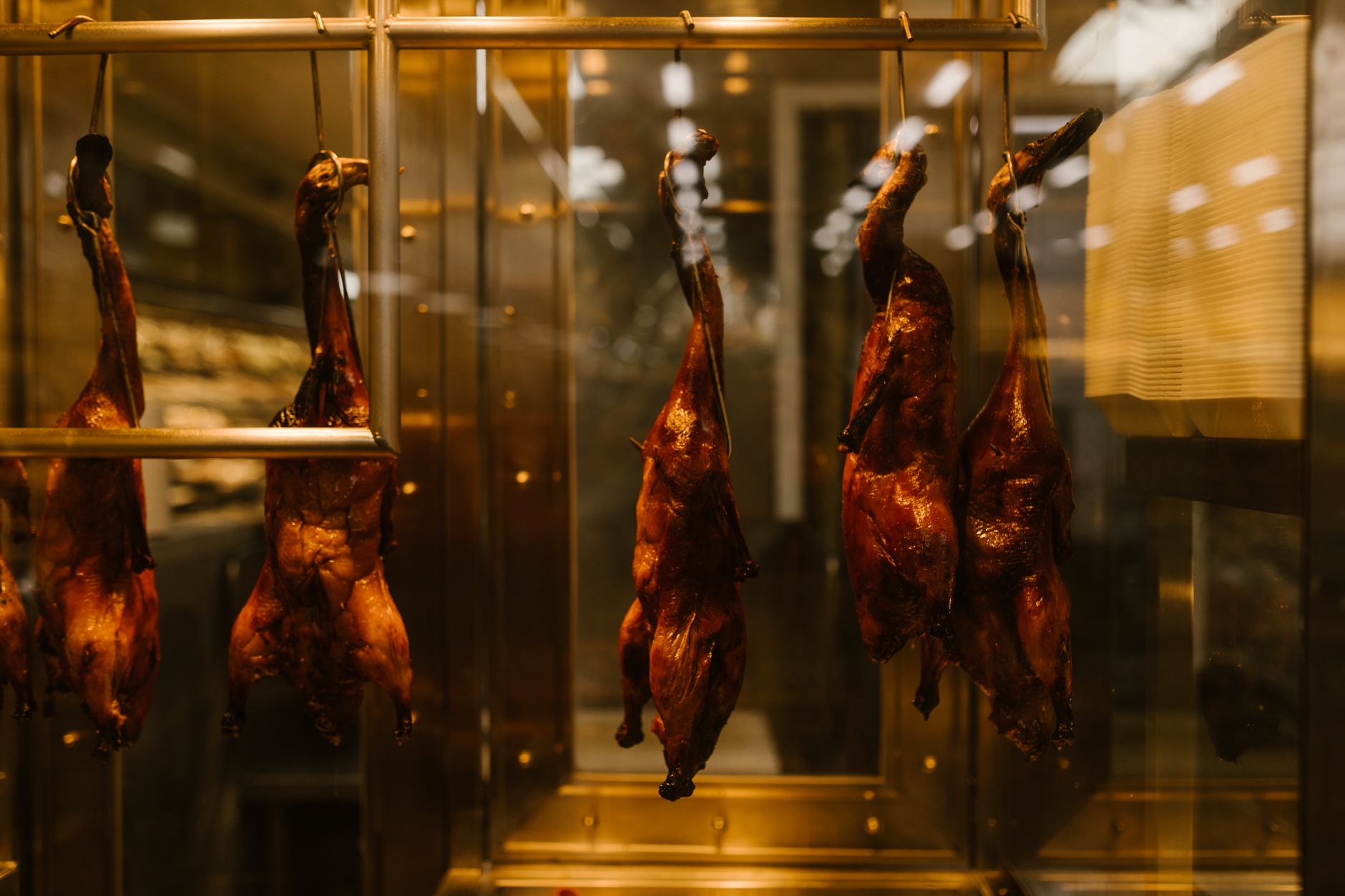
Beijing cuisine, also known as Jing Cuisine, is the culinary legacy of an imperial capital that drew flavors from across China. Rather than evolving solely from local farming traditions, it combines the sophistication of imperial court cuisine, the refined techniques of Shandong (Lu) cuisine, the distinctive flavors of Hui (Muslim) cuisine, and the culinary traditions of the Manchu and Mongolian peoples. Its defining characteristics include carefully selected ingredients, predominantly savory flavors, meticulous cooking techniques, elegant presentation, and exceptional expertise in preparing lamb and wheat-based dishes. Like the city itself, Beijing's food culture ranges from lavish imperial banquets to humble street fare.
No dish is more synonymous with Beijing than Peking Duck. Originating during the Ming Dynasty and elevated to an imperial delicacy in the Qing Dynasty, it has become the city's signature culinary icon. Traditionally, specially bred ducks are roasted over an open fire fueled by fruitwoods such as jujube and pear, producing remarkably crisp, amber-colored skin while keeping the meat tender and succulent.
Serving Peking Duck is a performance in itself. Skilled chefs carve the bird into well over one hundred delicate slices, each combining crispy skin with tender meat. Diners wrap a few slices in a thin steamed pancake with sweet bean sauce, shredded scallions, and cucumber, creating a perfect balance of crispness, rich duck fat, sweetness, and fresh aromatics. While century-old institutions such as Quanjude and Bianyifang remain legendary, modern restaurants including Da Dong and Siji Minfu continue to reinterpret this classic while respecting its traditions.
If Peking Duck represents the elegance of imperial cuisine, instant-boiled mutton (Shuan Yangrou) is the soul of everyday Beijing dining. Thin slices of hand-cut lamb—often described as "as thin as paper and as translucent as crystal"—are briefly cooked in a traditional copper hot pot heated by charcoal. The broth itself is intentionally simple, seasoned only with ginger, scallions, dried shrimp, and mushrooms to enhance the natural flavor of the meat.
The lamb is then dipped into a rich sesame-based sauce made with sesame paste, fermented tofu, fermented chive flowers, and chili oil. This beloved dish reflects the lasting influence of Manchu and Mongolian nomadic culture on Beijing's cuisine. Restaurants such as Donglaishun and Jubaoyuan remain local favorites, often drawing long queues throughout the day.
Street food is the heart of Beijing's culinary identity, with hundreds of traditional snacks enjoyed across generations.
Perhaps the city's most polarizing specialty is Douzhi, a fermented mung bean drink traditionally served with Jiaoquan, crispy deep-fried dough rings. Made from the fermented by-product of mung bean starch production, Douzhi has a grayish-green appearance and a distinctly sour aroma. Locals often joke that enjoying Douzhi is the ultimate test of whether someone is a "true Beijinger"—those who love it consider it irresistible, while others struggle to finish even a sip.
Another iconic breakfast dish is Chao Gan. Despite its name, which literally means "fried liver," it is actually simmered rather than fried. Pork liver and pork intestines are slow-cooked into a thick, glossy garlic-infused gravy and traditionally served with steamed pork-and-scallion buns.
Lu Zhu Huoshao has similarly humble origins. Evolving from an imperial braised pork dish, it became an affordable meal by substituting premium cuts with pork offal, simmered together with dense wheat cakes in a deeply flavored broth. Rich, savory, and served piping hot, it perfectly embodies the hearty character of northern Chinese comfort food.
Another everyday favorite is Zhajiangmian (Beijing Fried Sauce Noodles). A rich sauce made from yellow soybean paste and sweet bean paste is slowly cooked with diced pork belly until fragrant and glossy, then served over fresh wheat noodles with an assortment of finely shredded seasonal vegetables known collectively as mianma. It remains one of the most beloved homemade dishes in Beijing.
Together, these culinary traditions reveal different facets of Beijing's character. The city's devotion to Peking Duck reflects its appreciation for craftsmanship and ceremony. Shuan Yangrou and Douzhi embody its openness, resilience, and unpretentious spirit. And a steaming bowl of Lu Zhu Huoshao or Zhajiangmian speaks to the comfort of home, family, and everyday life.
Modern History & Contemporary Development

Beijing's modern history is one of continual reinvention, shaped by the competing forces of imperial tradition, revolution, and modernization.
In 1860, during the Second Opium War, Anglo-French forces occupied Beijing, looted and burned the Old Summer Palace (Yuanmingyuan), and compelled the Qing government to sign the Convention of Peking. Foreign diplomats were subsequently permitted to establish permanent legations in the city, leading to the creation of the Dongjiaominxiang Legation Quarter. While this enclave represented a painful loss of sovereignty, it also introduced Western technology, architecture, and ideas, marking the beginning of Beijing's reluctant engagement with the modern world. During the Boxer Rebellion in 1900, the Eight-Nation Alliance again occupied the city, leaving Beijing scarred by war and destruction.
The Xinhai Revolution of 1911 brought more than two thousand years of imperial rule to an end. During the Republic of China period (1912–1949), political instability and warlord conflicts slowed the city's physical development. In 1928, Beijing lost its status as the national capital and was officially renamed Beiping.
Ironically, this period became one of Beijing's greatest eras of intellectual and cultural influence. As the center of the New Culture Movement and the birthplace of the May Fourth Movement, institutions such as Peking University and Tsinghua University attracted influential scholars including Chen Duxiu, Hu Shi, and Lu Xun, whose advocacy of "Mr. Democracy" and "Mr. Science" profoundly shaped modern Chinese thought.
In 1937, the Marco Polo Bridge Incident marked the beginning of full-scale war between China and Japan. Beiping fell under Japanese occupation and remained occupied for the next eight years, one of the darkest chapters in the city's history.
Following the founding of the People's Republic of China in 1949, Beijing once again became the national capital and entered a new era of development. Guided by Soviet-inspired planning, the city transformed from a consumption-oriented economy into a major industrial center. Large state-owned enterprises—including Shougang Steel, electronics factories, and textile mills—drove rapid urban expansion.
During this period, the enlargement of Tiananmen Square, the extension of Chang'an Avenue, and the construction of the celebrated Ten Great Buildings established the monumental civic landscape that still defines central Beijing today. However, rapid industrialization also brought environmental challenges, including air pollution and water shortages. In the pursuit of modernization and improved transportation, large sections of Beijing's ancient city walls were demolished, while countless hutongs and traditional courtyard houses gave way to broad avenues and modern residential blocks. The loss of these historic neighborhoods remains one of the most debated chapters in Beijing's urban history.
China's Reform and Opening-up ushered in another profound transformation. Beginning in the 1980s, Beijing gradually shifted from an industrial economy toward services, finance, technology, and culture. In the 21st century, the city adopted its long-term vision as China's political center, international exchange center, cultural center, and world-class livable city. Heavy industries were relocated, and the closure of the Shougang Steel Plant in 2010 symbolized Beijing's transition into the post-industrial era.
Hosting the 2008 Summer Olympic Games became a defining milestone in Beijing's modernization. Landmark venues such as the Bird's Nest and the Water Cube, together with extensive investments in transportation and public infrastructure, introduced a confident, modern, and globally connected Beijing to the world.
Today, Beijing serves as China's Four National Centers: the nation's political center, cultural center, international exchange center, and center for scientific and technological innovation. The innovation ecosystem centered around Zhongguancun continues to position Beijing at the forefront of global technology. Meanwhile, the development of the Beijing Municipal Administrative Center, the establishment of the Xiong'an New Area, the preservation of the historic old city, and the UNESCO inscription of the Beijing Central Axis all reflect Beijing's commitment to balancing modernization with cultural heritage while pursuing high-quality, sustainable development.
Transportation

As China's national transportation hub, Beijing boasts one of the country's most comprehensive transportation networks, radiating in every direction. The city is served by two major international airports. Beijing Capital International Airport, located in the northeast, is one of the world's busiest aviation hubs, operating three passenger terminals with an extensive global route network. To accommodate growing demand, Beijing Daxing International Airport opened in 2019 in the city's southern suburbs. Designed by renowned architect Zaha Hadid, its iconic starfish-inspired terminal and highly intelligent design have made it one of China's new international gateways.
Rail travel is equally convenient. Beijing is served by several major railway stations, including Beijing Railway Station, Beijing West, Beijing South, and Beijing North. Among them, Beijing South Railway Station is the primary departure point for both the Beijing–Tianjin Intercity Railway and the Beijing–Shanghai High-Speed Railway. High-speed trains reduce travel time to Tianjin to approximately 30 minutes, while Shanghai can be reached in as little as 4.5 hours, making regional travel remarkably efficient.
Getting around the city itself offers a firsthand appreciation of Beijing's immense scale and meticulous urban planning. The road network is organized around a series of concentric ring roads—from the 2nd Ring Road through the 6th Ring Road (with a 7th Ring Road under long-term planning)—combined with numerous expressways and arterial roads that radiate outward, forming a distinctive grid-and-ring layout. While traffic congestion was once one of Beijing's most notorious urban challenges, the city has responded by investing heavily in public transportation, particularly its metro system.
As of 2024, the Beijing Subway operates 27 lines with a total network exceeding 800 kilometers (500 miles), ranking among the largest metro systems in the world. Stretching from the historic city center to distant suburban districts, the network reaches nearly every corner of the metropolis. Particularly noteworthy are Line 1, which follows much of the city's historic east–west axis, and Line 2, which loops around the old inner city along the former Ming Dynasty walls. Together they form the backbone of the metro system, seamlessly connecting with buses and other transit services while carrying millions of passengers every day.
Visitors will quickly notice several uniquely Beijing transportation experiences. First is the sheer scale of cross-city travel. A single subway journey from Daxing in the south to Changping in the north can easily exceed 90 minutes, offering a vivid sense of just how vast the capital is. Second is the diversity of the city's bus network. Besides conventional buses, you'll find small neighborhood electric shuttle buses serving hutong communities, as well as nostalgic Dangdang Trams departing from Qianmen, adding a touch of old Beijing charm to modern commuting. Finally, the city's extensive bike-sharing system provides seamless last-mile connectivity. Outside almost every subway station, rows of brightly colored shared bicycles make it easy to continue your journey. Cycling beneath tree-lined avenues or around Shichahai remains one of the most enjoyable ways to discover Beijing's quieter corners. For visitors, purchasing a Beijing Transportation Smart Card (Yikatong) or simply using the Yitongxing or Beijing Transit mobile apps is the easiest way to travel efficiently throughout the city.
Travel Tips
Best Time to Visit
Beijing experiences four distinct seasons, but autumn (September–November) is widely regarded as the best time to visit. Known locally as the "Golden Autumn," the season brings crisp blue skies, low humidity, and comfortable temperatures. Golden ginkgo-lined avenues, the fiery red foliage of Fragrant Hills (Xiangshan), and the striking contrast between the Forbidden City's red walls and golden roofs under brilliant blue skies create some of the city's most memorable scenery.
Spring (April–May) is also beautiful, though occasional strong winds and brief dust storms may occur. Summers are typically hot, humid, and rainy, while winters are cold and dry, with temperatures occasionally dropping below −10°C (14°F). Snowfall transforms the Forbidden City into an unforgettable winter landscape, and the smaller crowds offer a rare opportunity to experience Beijing's historic neighborhoods and traditional Lunar New Year atmosphere at a slower pace.
Must-See Experiences
Explore the Vastness of the Forbidden City
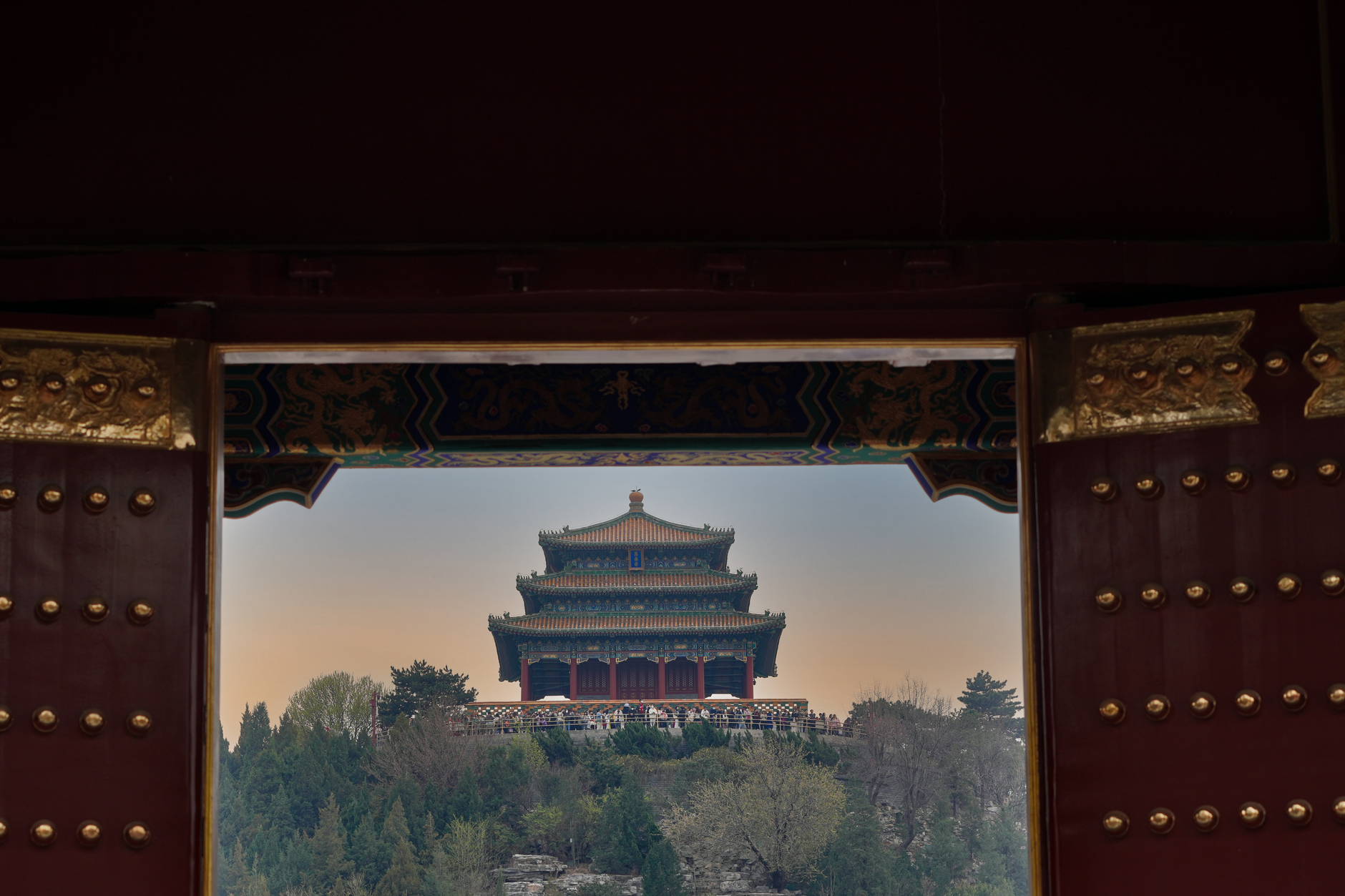
Allow at least half a day to explore China's imperial palace. Enter through the Meridian Gate, follow the central axis past the Hall of Supreme Harmony to the Palace of Heavenly Purity, then wander through the Eastern and Western Six Palaces before exiting through the Gate of Divine Might. For the most spectacular panoramic view, climb Wanchun Pavilion in Jingshan Park near sunset and admire the endless sea of golden palace roofs. Tickets should be reserved at least one week in advance through the official Palace Museum booking platform.Wander the Hutongs and Discover Old Beijing
Skip the heavily commercialized Nanluoguxiang and instead explore quieter neighborhoods such as Houhai, the hutongs around Baita Temple, or Shijia Hutong. Renting a bicycle is one of the best ways to explore at your own pace. Small museums such as the Shijia Hutong Museum, housed within a beautifully preserved traditional courtyard residence, provide fascinating insight into the evolution of hutong life.Walk the Great Wall
Look beyond the crowded Badaling section. Mutianyu offers magnificent scenery, excellent facilities, and is particularly popular with international visitors, while Simatai is famous for its dramatic terrain and its picturesque connection with Gubei Water Town. Choose official shuttle services or public transportation instead of unauthorized drivers soliciting passengers on the street. Regardless of which section you visit, the most rewarding experience comes from climbing the ancient stone steps and placing your hand on bricks that have stood for centuries.Experience Beijing's Art and Museums
Spend the morning exploring galleries inside the 798 Art District, where Bauhaus-inspired industrial architecture has been transformed into one of China's leading contemporary art hubs. In the afternoon, choose between the National Museum of China, home to many of the country's most treasured historical artifacts, or the National Centre for the Performing Arts, where world-class opera, ballet, and symphony performances are frequently staged in the evenings.
Practical Tips
Book attraction tickets in advance. Nearly all of Beijing's major attractions—including the Forbidden City, the National Museum of China, and the Summer Palace—require online real-name reservations. During peak travel seasons, tickets often sell out days in advance, and on-site ticket counters are generally unavailable.
Use mobile payments whenever possible. Cash is becoming increasingly uncommon, particularly among small vendors and on public transportation. Install Alipay or WeChat Pay and link an international bank card before your trip. Doing so will make traveling around Beijing significantly more convenient.
Choose accommodation wisely. First-time visitors with a comfortable budget should consider staying inside the 2nd Ring Road, particularly around Wangfujing, Xidan, or Dongsi, for the most convenient access to Beijing's historic core. Travelers seeking better value while maintaining excellent transportation links should look for hotels near Metro Lines 2, 4, or 10.
Important Notes
Beijing is widely regarded as one of China's safest and best-managed cities. Always carry your original passport, as identity verification and security screening are required when entering key areas such as Tiananmen Square. Smoking is prohibited in many public spaces, especially in hutongs, parks, and plazas where no designated smoking areas are provided. Visitors should also show appropriate respect when encountering historical monuments, cultural heritage sites, and political landmarks.
Finally, don't try to conquer a city with more than 3,000 years of history in just a day or two. Slow down. Leave room in your itinerary for unexpected moments—a flowering crabapple tree in a quiet courtyard, the sound of traditional pigeon whistles drifting through the sky, or an engaging conversation with an elderly Beijinger. Those unplanned encounters often become the memories that define a journey to Beijing.