Shanghai
Chapter One: City Profile

Shanghai – a city whose very name evokes the convergence of East and West, tradition and modernity – lies at the midpoint of China’s eastern seaboard, on the leading edge of the Yangtze River Delta. It faces the vast East China Sea to the east, Hangzhou Bay to the south, borders Jiangsu and Zhejiang provinces to the west, and reaches the Yangtze estuary to the north. This land, built up over ten millennia by silt carried by the Yangtze, is a classic alluvial plain – low and flat, with an average elevation of only about four metres, and its highest point is Dajinshan, barely a hundred metres above sea level. Water is the city's soul: the Huangpu River arcs through it like a bow, dividing Shanghai into Puxi (west of the river) and Pudong (east), before emptying into the Yangtze. Suzhou Creek (the Wusong River) meanders like a gentle ribbon from west to east, joining the Huangpu, and has nourished riparian life for centuries. At the Yangtze mouth, Chongming Island – China's third largest island – is Shanghai's youngest land, still slowly accreting, and serves as a natural green lung and ecological shield for this mega‑city.
Shanghai covers an area of 6,340.5 square kilometres and has a permanent population of over 24.8 million, making it China's most populous city and one of the world's largest metropolitan areas. As one of the four municipalities directly under the central government of the People's Republic of China, it occupies an irreplaceable position in national strategy: the State Council's approved master plan defines its functions as "an international centre for economy, finance, trade, shipping, and scientific and technological innovation." This positioning encapsulates the city's astonishing transformation from a small fishing village to a global metropolis on the western shore of the Pacific.
Shanghai's nicknames are layered like its history, each carrying its own story. The best‑known, "Shencheng" (City of Shen), originates from the legend of Lord Chunshen, Huang Xie, from the Warring States period – it is said he dredged the Huangpu River (hence its alternative name, Chunshen River), and the city derived its ancient appellation from this. The name "Shanghai" itself comes from the water systems of the Song dynasty: the "Shanghai Pu," a tributary of the Wusong River, was a busy anchorage for merchant ships. During the Xianchun era of the Southern Song, the town of Shanghai was officially established, and in the 29th year of the Zhiyuan era of the Yuan dynasty (1292 CE), Shanghai County was created – thus the name was fixed. After the city opened as a treaty port in modern times, the tidal flats along both banks of the Huangpu became known as "Shanghai Bund" (Shanghai Tan), a term that later came to symbolise adventure, opportunity, and a glittering, worldly existence. The enchanting and imaginative nickname "Modu" (Magic City) appeared in the 1924 novel Mato by Japanese writer Muramatsu Shōfū. In his depiction, the city was a bizarre patchwork of foreign concessions and Chinese districts, and its magical allure has never faded; today's young people still fondly use "Modu" to capture Shanghai's fantasy, magnetism, and ever‑changing dynamism.
Chapter Two: Historical Evolution
Shanghai's modernity often overshadows its deep historical roots. Archaeological finds show that as early as 6,000 years ago, Neolithic settlements such as the Songze culture flourished in the western part of today's Shanghai, where early inhabitants engaged in rice farming and fishing. In the tenth year of the Tianbao era of the Tang dynasty (751 CE), Huating County was established in what is now Songjiang District – the first stable administrative unit in this area. The true entry of "Shanghai" onto the historical stage came during the Southern Song. As the Wusong River silted up, the trade centre shifted to its tributary, the Shanghai Pu, and in 1267 (Xianchun 3), the town of Shanghai was founded. In 1292, the Yuan court officially established Shanghai County, which is generally regarded as the starting point of the city's formal history. At that time, it was little more than a port town with a maritime trade office, but its outward‑looking maritime posture was already emerging.
In 1843, the Treaty of Nanjing, which ended the First Opium War, pushed Shanghai onto a completely different track – the opening of the treaty ports. Britain, France, the United States, and others successively carved out concessions, turning Chinese territory into "states within a state." The concessions brought Western municipal administration, legal systems, trade frameworks, and modern civilisation, and rapidly transformed Shanghai from a county town into the most prosperous trading port in the Far East. In 1865, the Jiangnan Arsenal was established here, becoming the cradle of modern Chinese industry. Western‑style buildings rose along the Bund, electric lights appeared on Nanjing Road, and the clang of trams echoed through the streets. By the 1930s, Shanghai was the foremost city in the Far East, hailed as the "Paris of the East." Yet beneath this glittering surface lay severe polarisation: it was a paradise for adventurers, the birthplace of both national capital and the working class, and also the cradle of the Chinese Communist Party – in 1921, its First National Congress was held secretly in a Shikumen lane house at what is now 76 Xingye Road.
After the founding of the People's Republic of China in 1949, Shanghai's role underwent a fundamental shift. The concessions were reclaimed, and the state designated Shanghai as its largest industrial base. Textiles, machinery, chemicals, and steel underpinned the new China's economy. Shanghai‑brand watches, Forever bicycles, and Butterfly sewing machines became icons of pride for a generation. After reform and opening‑up, the southern special economic zones took the lead, and Shanghai for a time suffered the anxiety of being a "rear guard." It was not until 1990 that the Central Committee of the Communist Party and the State Council announced the development and opening of Pudong – this "trump card" re‑energised Shanghai's ambitions. Lujiazui, once farmland and warehouse districts, transformed into a skyline bristling with global financial institutions, and Shanghai once again stepped onto the world stage. Today, aiming to build "five centres," with national strategies such as the Lingang Special Area of the Pilot Free Trade Zone and the Hongqiao International Open Hub layered upon it, Shanghai is not only China's Shanghai but also a node in the global urban network, entrusted with hosting home‑ground diplomatic events like the China International Import Expo. Historical traces are scattered throughout the city like pages of a book: the Bund's gallery of international architecture witnesses the rise and fall of the concession era; the site of the First CPC Congress at 76 Xingye Road records the footsteps of founders; and the Mid‑Lake Pavilion and Nine‑Turn Bridge in Yu Garden embodies the refined Jiangnan elegance of four centuries ago.
Chapter Three: Cultural Essence

Shanghai's culture defies a single label; it is more like a river that ceaselessly absorbs a hundred streams, giving birth to a distinctive "Shanghai‑style" (Haipai) character through fusion. Language is the most direct vehicle. The Shanghai dialect belongs to the Su‑Hu‑Jia sub‑group of the Taihu Wu dialect family – it is the city's most vibrant everyday voice. It preserves archaic Wu words like nong (you), ala (we), and bexiang (to play), while also displaying remarkable openness to foreign borrowings: shafa (sofa), shuimenting (cement), sideke (stick) – these transliterations were once fashionable marks of modernity in the mouths of citizens. The standard urban dialect of the city centre differs subtly in pronunciation and vocabulary from the local dialects of Jiading, Chongming, and other outlying areas, forming a delicate linguistic mosaic. Today, while Mandarin is widely promoted, the protection and transmission of the local dialect are receiving increasing attention.
Folk traditions form part of the city's roots. At the New Year, the Lantern Festival at the Old City God Temple draws crowds in a hundred lights and theatrical performances – a carnival that has lasted for centuries. In spring, the Longhua Temple Fair, and in autumn, the Osmanthus Festival, all connect to the solar‑term memories of the agricultural age. The life customs of the Shikumen lane houses constitute a unique residential culture, a semi‑private, semi‑public neighbourhood relationship: aunties sorting vegetables in the courtyard, uncles playing chess at the lane entrance, the aroma of fried dough sticks wafting through narrow passages – this intimate yet measured community life nurtured the character of Shanghai's citizens. In terms of faith, alongside the thriving incense of Buddhist temples like Jing'an, Longhua, and Jade Buddha, the Taoist City God Temple honours the city's protective deity, while Xujiahui Cathedral, the Holy Trinity Church, and many other religious sites reflect a pattern of pluralistic coexistence.
The Haipai art schools reveal the city's unconstrained creativity. After the port opened, the Shanghai school of painting and calligraphy – represented by Zhao Zhiqian and Wu Changshuo – injected the weight of seal‑script epigraphy into ink painting, using bold colours and popular subjects to renovate traditional literati art. The local opera form, Huju (Shanghai opera), evolved from local Tanhuang ballads, and in its soft Shanghai dialect performs tales of joy and sorrow such as Luohan Qian and Thunderstorm. Comic sketches (Huaji drama) absorb shuochang (storytelling and singing), cross‑talk, and other performing arts, using witty dialects and timely yet sharp satire – they have been called "the laughing Shanghainese school of learning." In the decorative arts, Gu embroidery from Luxiang Garden uses painting as the basis for needlework, splitting threads finer than human hair; Jiading bamboo carving wields the knife as a brush to express literati elegance; and Jinshan peasant paintings depict the vibrant life of Jiangnan villages in saturated primary colours.
These living traditions have been systematically protected. Shanghai now boasts numerous national‑level intangible cultural heritage items, including Huju opera, Huaji drama, Duojiao (comic monologue), Gu embroidery, Jiading bamboo carving, Shanghai woollen embroidery, Jiangnan sizhu (silk‑and‑bamboo instrumental music), Shikumen lane construction techniques, and the Yu Garden Lantern Fair. They are not museum specimens but living things that still breathe on stages, in workshops, and at festivals. Step into an old teahouse, and you may hear Jiangnan sizhu – the melodies of flute, xiao, and erhu flowing like water – and this is the most subtle yet resilient continuation of Haipai culture.
Chapter Four: Architecture and Urban Landscape

Shanghai's urban landscape is a three‑dimensional architectural history, where textures from different eras are collaged and superimposed, creating a dramatically charged visual tension. The oldest layer is the Jiangnan foundation. Typical traditional architecture can be seen in Yu Garden in the old city – this Ming‑era private garden uses rockeries, water pavilions, verandas, and dragon walls to create infinite spatial variation within a small area, embodying the ideal of "urban forest." In the ancient water towns scattered across Qingpu, Jiading, and other districts, white‑walled, black‑tiled dwellings with small bridges and flowing streams accompany the river, representing Shanghai's pre‑urban Jiangnan life. But the form that truly defines Shanghai's domestic architecture is the modern Shikumen. This unique hybrid combines the three‑court layout of Jiangnan folk houses with European terraced housing – identifiable by its stone gate frames, black‑lacquered solid timber doors, and brass knockers – while internally accommodating traditional spaces such as a courtyard, main hall, and side rooms. Tens of thousands of Shikumen lanes form the city's capillaries, carrying a century of everyday joys and sorrows of Shanghai's residents. Today, districts like Xintiandi, Sinan Mansions, and Jianye Li have protectively adapted Shikumen structures, injecting new urban functions, and they serve as vivid entry points for reading the city's architectural DNA.
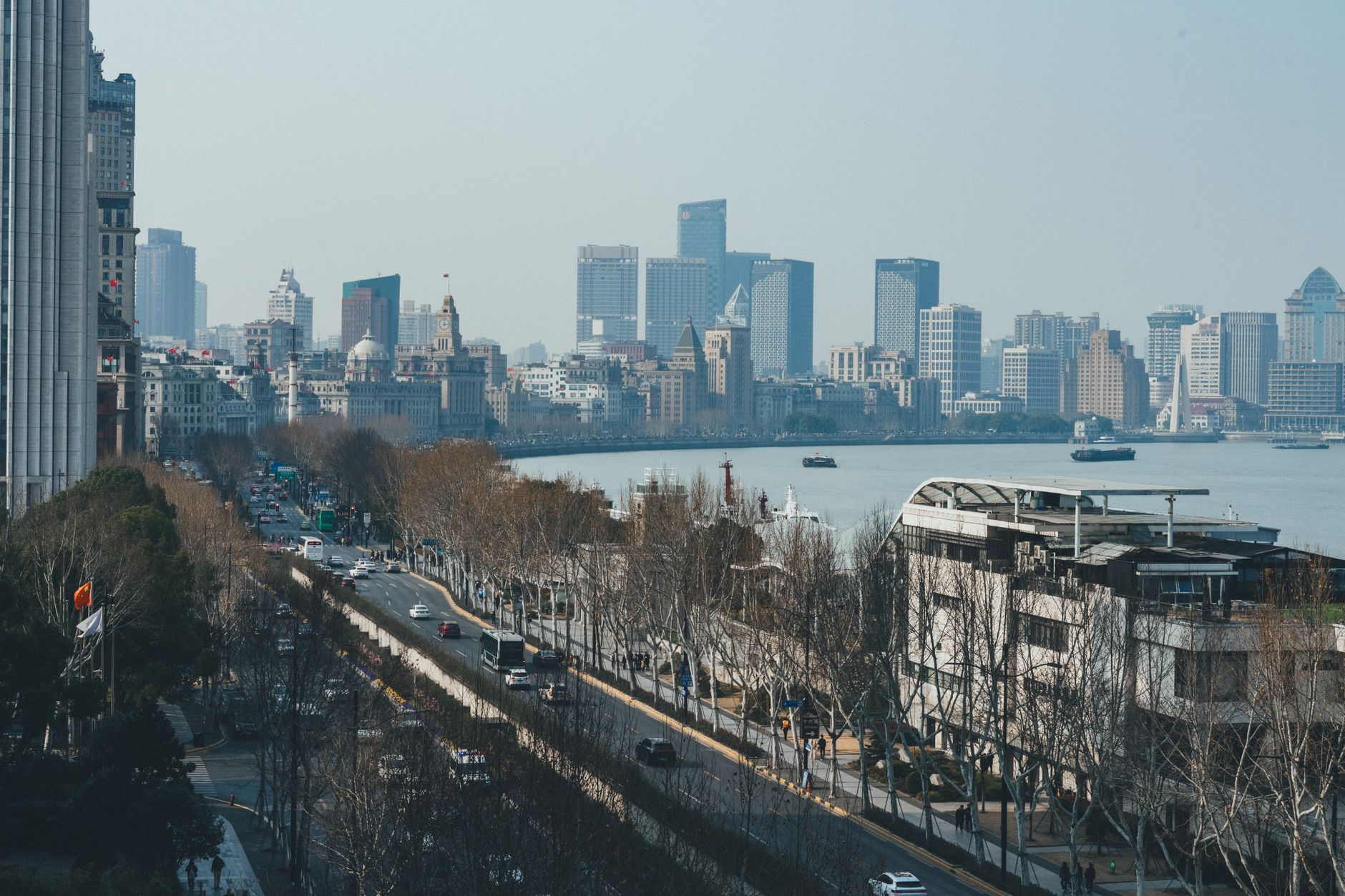
During the nearly hundred years after the 1843 opening, a surge of Western architectural ideas gave Shanghai its reputation as the "Exhibition of International Architecture." The Bund is a one‑kilometre arc that gathers a wealth of styles, from Neoclassicism to Art Deco. The former HSBC Building (now the Pudong Development Bank) displays imperial grandeur with its domed murals and colossal Ionic columns; the Custom House's tall clock tower tolls the East Is Red chimes, and since 1927 it has been the time‑keeper on the Huangpu. The green pyramid roof of the Peace Hotel was once a symbol of Far Eastern luxury. Beyond the Bund, extending into the former French Concession, buildings like the Wukang Mansion and the Normandie Apartments – works of architects such as László Hudec – showcase an elegant blend of Art Deco and Classicism. The Park Hotel, once known as the "Far East's tallest building," stood at 83.8 metres when completed in 1934, holding the city's height record for half a century.
After the 1990 decision to develop Pudong, Shanghai's skyline was rewritten entirely. Lujiazui now concentrates landmarks including the Oriental Pearl Radio & TV Tower, the Jin Mao Tower, the Shanghai World Financial Center, and the Shanghai Tower – with their recognisable silhouettes ( "pearls falling on a jade plate," "pagoda," "bottle‑opener," "spiral ascent") chasing the sky, symbolising the city's unceasing ambition. Today, Shanghai has moved on to renew its waterfront: the entire 45‑kilometre banks of the Huangpu River, from Yangpu Bridge to Xupu Bridge, have been opened up – former factories, warehouses, and docks turned into parks, art galleries, and running tracks, allowing citizens to enjoy the majestic views of their mother river. The restoration of Suzhou Creek and the connection of its banks have revived the gentle charm of the city's inner waterway. Iconic neighbourhoods such as the Hengshan‑Fuxing Road Historical and Cultural Area, where old villas under plane trees coexist with new boutiques, exemplify the symbiosis of this diverse urban fabric.
Chapter Five: Culinary Culture

On the Shanghainese dining table lies a code of fusion and refinement. The local Benbang cuisine forms the backbone of the city's food culture. Rooted in the traditional farmhouse flavours of the region, it absorbed characteristics from neighbouring cuisines – Anhui, Jiangsu, Wuxi, Ningbo – and gradually developed its own flavour signature: "richly oiled, dark‑sauced, mellow and savoury, salty with a hint of sweetness." This distinctive personality carries life's imprints – early dock workers and urban dwellers, under heavy labour and a humid climate, needed richly oiled, deeply coloured, high‑sugar foods to comfort the body. Yet Shanghainese people, with their extreme attention to detail, have elevated these seemingly robust principles to an art form.
Classic Benbang dishes often display a knack for turning the mundane into the sublime. Oil‑exploded shrimp – live river shrimp quickly deep‑fried at high heat, then coated in a sauce of soy and sugar – deliver crisp shells and tender flesh, a perfect sweet‑salty balance that is the ultimate test of heat control. Caotou quanzi (stewed pig intestines with clover) brings together fatty richness and fresh verdure in one pot. Yanduxian ( "salt‑cured‑and‑fresh" stew) – the name itself is full of action: "yan" means cured meat, "du" is the Shanghai dialect for simmering slowly, and "xian" refers to fresh pork and spring bamboo shoots. This milky‑white soup, simmered in a clay pot, is an essential spring ritual for families, combining savoury, fragrant, and fresh flavours in one bowl. Xiangyou shanhu (eel paste with sizzling oil) – when the stir‑fried shredded eel is brought to the table, the waiter pours a ladle of hot oil over it right in front of the diners, and the sizzle instantly releases the aromas of minced garlic, spring onion, and pepper. And we cannot skip red‑braised pork – the Benbang method uses caramelised sugar to stew the pork belly until it is glossy, translucent, and melts in the mouth, with sticky skin and rich fat, achieving a flawless savoury‑sweet balance.
Shanghai snacks are another cryptic code running through the streets. Nanxiang steamed buns (xiaolongbao) are famous for their thin skins, tender filling, generous broth, and elegant shape; the eating mantra – "gently lift, slowly move, first open a window, then drink the soup" – is known to every Shanghainese from childhood. Pan‑fried buns (shengjian mantou) are the undisputed street king; the thick, round wrappers hark back to tradition, and today the "clear‑broth" and "mixed‑broth" schools each have their devotees. With golden, crispy bottoms and juicy, firm meat fillings, they are perfectly paired with a bowl of curry beef soup or fried tofu with vermicelli – a classic lunch combination. Breakfast revolves around the "four heavenly kings": flatbread (dabing), fried dough sticks (youtiao), steamed rice balls (cifan), and soy milk. A flatbread with a fried stick, and a glutinous rice ball stuffed with pork floss, and pickled vegetables – simple, yet they sustained generations through their hurried yet orderly mornings.
Behind these dishes lies the regional character of Shanghai. The obsession with flavour balance reveals an innate shrewdness and sense of proportion; the ability to turn ordinary ingredients into dozens of variations reflects a practical, cost‑conscious spirit. The local adaptation of Western food has a long history, from the earliest "borscht" to today's fusion bistros scattered across the city – all expressions of the city's cosmopolitan outlook: ever ready to embrace foreign flavours and assimilate them into new traditions.
Chapter Six: Modern and Contemporary Development

Shanghai's modern history is the most concentrated specimen of China's encounter with globalisation. The 1843 opening under the Treaty of Nanjing, and the concessions that followed, completely overturned the city's inward logic. The establishment of the Jianghai Customs Office and the opening of ocean‑going trade routes sent tea and silk out to the world via Shanghai, while bringing in foreign cloth, machinery, and even new ideas and lifestyles. By the 1930s, Shanghai accounted for over half of China's total foreign trade – it was the undisputed economic heart. This process simultaneously fostered the germination of national industry and the precocious development of an urban civilisation – here the country's first electric lights, tap water, gas, telephones, and trams appeared – but it also left deep scars due to its semi‑colonial nature. The infamous sign in the Public Garden on the Bund – "No Chinese and dogs allowed" – stood as a three‑dimensional reminder of national humiliation.
After 1949, Shanghai entered a phase of being a planned‑economy industrial high ground. Private enterprises were restructured, concession traces were erased, and Shanghai contributed the vast majority of its fiscal revenue to the national treasury while assuming the role of the country's industrial machine. Shanghai's first fine‑watch movement, the first sewing machine, and the first Phoenix‑brand car – all were symbols of national pride in those years of scarcity. Large workers' villages such as Caoyang New Village and Anshan New Village shaped the urban lifestyle under socialism. However, over nearly four decades, urban infrastructure renewal lagged, housing was tight, and though satellite towns like Minhang and Jiading developed industrial zones, the central city remained congested and heavy – Shanghai appeared grey and aged for a time.
On 18 April 1990, the Central Committee and the State Council officially announced the development and opening of Pudong, triggering a transformation that has lasted over thirty years. National‑level development zones – Lujiazui Finance and Trade Zone, Jinqiao Export Processing Zone, Waigaoqiao Free Trade Zone – were successively established, attracting global capital and advanced manufacturing. The Shanghai Stock Exchange reopened, foreign banks set up branches, Nanjing Road was rebuilt as a pedestrian mall, and the city's appearance changed year by year. In the 21st century, Shanghai successfully bid to host the 2010 World Expo, with the theme "Better City, Better Life," carrying out the largest‑ever relocation and renewal along the Huangpu River. Taking this as an opportunity, the city accelerated its transition from an industrial city to a service‑based economy. New growth areas such as the Expo Site, Hongqiao Business District, and Qiantan have since emerged.
Today, Shanghai is deepening its transformation toward the "five centres" – international economic, financial, trade, shipping, and science‑and‑technology innovation centres. The establishment of the Lingang Special Area of the Pilot Free Trade Zone places Shanghai once again at the forefront of institutional opening, focusing on leading industries such as integrated circuits, artificial intelligence, and biomedicine. The integration of the Yangtze River Delta has been elevated to a national strategy, with Shanghai as the dragon head, weaving together with neighbouring cities into the most dynamic world‑class city cluster. The city's positioning is no longer merely as China's economic centre, but as a global city with a voice in international finance, shipping, and technology networks. From the sailing ships on the Huangpu to the automated gantry cranes at the unmanned terminal of Yangshan Deep‑Water Port, Shanghai has always used its own metamorphosis to interpret the interaction between China and the world.
Chapter Seven: Transportation and Getting Around

As a mega‑city, Shanghai's transport network is like a precisely operating giant organism, supporting tens of millions of daily trips. For intercity connections, Shanghai has two major international airports – Pudong and Hongqiao – with total annual passenger throughput exceeding 120 million, making it the fifth city cluster in the world to surpass 100 million air passengers. Pudong International Airport connects the globe with dense international routes and is China's main gateway to the world; together with Hongqiao, it forms a "two‑airport‑in‑one‑city" pattern. Even more remarkable is the Hongqiao comprehensive transport hub, which vertically stacks Hongqiao Airport's Terminal 2, the Beijing–Shanghai high‑speed railway, the Hongqiao Railway Station (starting point for the Shanghai–Nanjing and Shanghai–Hangzhou intercity lines), long‑distance bus terminals, and the metro system. Passengers can seamlessly transfer between planes, high‑speed trains, and subways – an integrated design concept lauded globally. The "one‑hour travel circle" centred on Shanghai covers major Yangtze River Delta cities through the high‑speed rail network: Nanjing, Hangzhou, Suzhou, and Wuxi are all within easy reach, and intercity commuting is already routine for many Shanghai office workers.
The city's internal transport is built on a world‑class rail transit backbone. Since the first line of the Shanghai Metro opened in 1993, the network has grown to 20 lines, with an operating length exceeding 800 kilometres – the longest in the world. Like a dense spider's web, it reaches most areas of Puxi and Pudong, with daily ridership often exceeding 10 million. Stations are clearly signposted in both Chinese and English, headways are timed to the second, and off‑peak carriages are relatively comfortable – all of which makes the metro the most reliable way to explore the city. Buses cover the micro‑circulation, while the Huangpu River ferries – a century‑old traditional transport mode – still operate over a dozen routes, such as Dongchang Road to Jinling East Road, and Dongjiadu to Tangqiao. These are the few "pleasure cruises for the common people" where, for just two yuan, you can enjoy a panoramic view of the Bund and Lujiazui.
Unique travel experiences become memorable chapters. The Shanghai Maglev Train runs from Metro Longyang Road Station to Pudong International Airport – a 30‑kilometre journey in just eight minutes, reaching a maximum speed of 431 km/h. It is the world's only high‑speed maglev in commercial operation. Riding it gives you not only speed but also a futuristic floating sensation. If you prefer a slower pace, cycling is ideal: the Huangpu River waterfront greenway and Suzhou Creek footpaths, stretching for tens of kilometres, link many core scenic sections; and pedalling or strolling through the plane‑tree‑shaded streets of the former French Concession lets you feel the city's warmth even more intimately. Taking a taxi also has its charm – the veteran taxi drivers, known as "chatou" in Shanghainese, know all the old names of former alleys by heart, and their way of preserving oral memory across generations is itself a fast‑fading oral map of Shanghai.
Chapter Eight: Travel Tips

For travellers exploring Shanghai, choosing the right season is the first step to a lasting impression. Shanghai has four distinct seasons, with spring (March to May) and autumn (September to November) widely regarded as the best times to visit. In spring, magnolias and cherry blossoms bloom successively in the parks; in autumn, the sky is high and clear, the air crisp, plane leaves carpet the small roads of the old French Concession, and the scent of osmanthus perfumes the breeze. Summer (June to August) is hot and humid, with occasional extended rains during the plum rain season – but this is also a great time to experience the city's vibrant nightlife, rooftop bars, and evening breezes on the Bund. Winter temperatures often hover above freezing, but the damp cold penetrates deeply, and indoor‑outdoor temperature differences are large; however, this season offers thinner crowds and a festive year‑end atmosphere.
The must‑do experiences can be summed up through several threads of understanding Shanghai. First, the magical skyline centred on the Bund–Lujiazui – it is best to start walking from Nanjing East Road to the Bund before dusk, wait for the historical buildings to light up and the Pudong skyscrapers to emerge in their dazzling array, then take a ferry or the sightseeing tunnel across the river, ascend to the "Top of Shanghai" observation deck in the Shanghai Tower, and look down from the clouds to truly feel the city's scale. Second, Yu Garden and the Old City God Temple – here you find a surviving Jiangnan garden and a popular religious space right in the middle of the metropolis. Walk across the Nine‑Turn Bridge to watch the koi in the lotus pond, sample a basket of Nanxiang steamed buns, then step inside Yu Garden's rockeries and pavilions to experience a tranquillity wrapped in urban bustle. Third, the Shanghai Museum and its surroundings – located in People's Square, the museum houses a world‑class collection of bronzes, ceramics, calligraphy, paintings, and coins, offering a shortcut to understanding Chinese civilisation. If contemporary art is more your interest, head to the West Bund Museum Avenue or the Power Station of Art. Fourth, a stroll through the former French Concession area – there is no fixed start or end. Begin at the Wukang Mansion, walk along Wukang Road, Fuxing West Road, Hunan Road, and others; on both sides, garden villas, memorial plaques, boutique shops, and independent cafés interlace – an immersive way to read the Haipai charm. Fifth, immerse yourself in local life – find an old‑style eatery in the morning for a breakfast of the "four heavenly kings," or slip into a corner izakaya or a small Benbang restaurant at night, using your taste buds to feel the city's pulse.
Practical tips: For public transport, it is recommended to download the "Metro Daduhui" app to scan codes for metro rides, or use the Alipay/WeChat transport QR codes that support Shanghai public transport – you will hardly need cash. Accommodation options are abundant: luxury hotels along the Bund and boutique guesthouses converted from old houses in the French Concession offer completely different perspectives. Most service establishments can communicate in English; learning a simple "Xiexie nong" (thank you) will earn you smiles. Note that Shanghai enforces strict waste sorting, and most public places have classified bins; smoking is banned in all public spaces and on transport. In terms of safety, Shanghai is one of the safest mega‑cities in the world, and walking alone late at night is generally safe, but do keep an eye on your belongings in crowded areas. Most importantly, keep an open mind and be patient. Beneath the surface of this fast‑paced, precise "Magic City" lie many warm, unassuming, and everyday corners that are not in a hurry to reveal themselves – and those are the most moving parts of Shanghai.